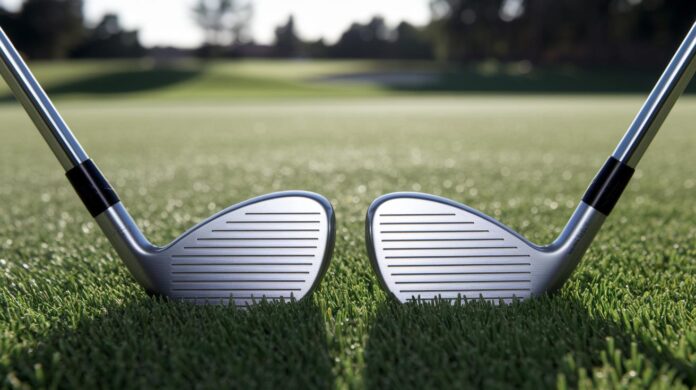
Have you ever wondered if a perfect swing can truly change your game? Blade golf clubs deliver pure precision that rewards every firm shot.
These clubs demand you hit right in the center. When you do, you get clear, crisp feedback, almost like tuning a fine instrument. When you hit that sweet spot, the sound and feel remind you just how important control is.
In this post, we'll chat about how these clubs offer unmatched feel and precision, helping you decide if the extra effort is worth the boost on the course.
Blade Golf Clubs Unpacked: Precision, Feel, and Control
Blade irons, often called muscle-back irons, have a compact, slim clubhead with a thin topline and narrow sole. This neat design gives you clear feedback and helps you shape your shots with real control. They demand a precise ball strike, so they’re best for skilled players who hit the clubface dead center. And when you nail that perfect contact, the satisfying sound and feel are almost like tuning a fine musical instrument, you really notice every detail.
The slim shape of these clubs means every shot is a clear reminder: precision is what matters most. With less weight around the edges, you instantly know where you hit the ball, letting you adjust your swing and shape your shot as you play. On the flip side, clubs with more weight (like cavity backs) offer a bigger sweet spot, making them more forgiving if you miss the center a bit.
Advanced golfers love blade irons because they deliver unmatched feedback and a tight connection between your swing and the shot outcome. Every swing becomes a chance to learn and fine-tune your technique. Even on tough days when every stroke counts, these clubs help you spot errors and refine your play. It’s this blend of precision, real feel, and total control that makes blade irons a favorite for golfers who appreciate the art of the game.
Blade Golf Clubs vs. Cavity Backs: Head Design Comparison
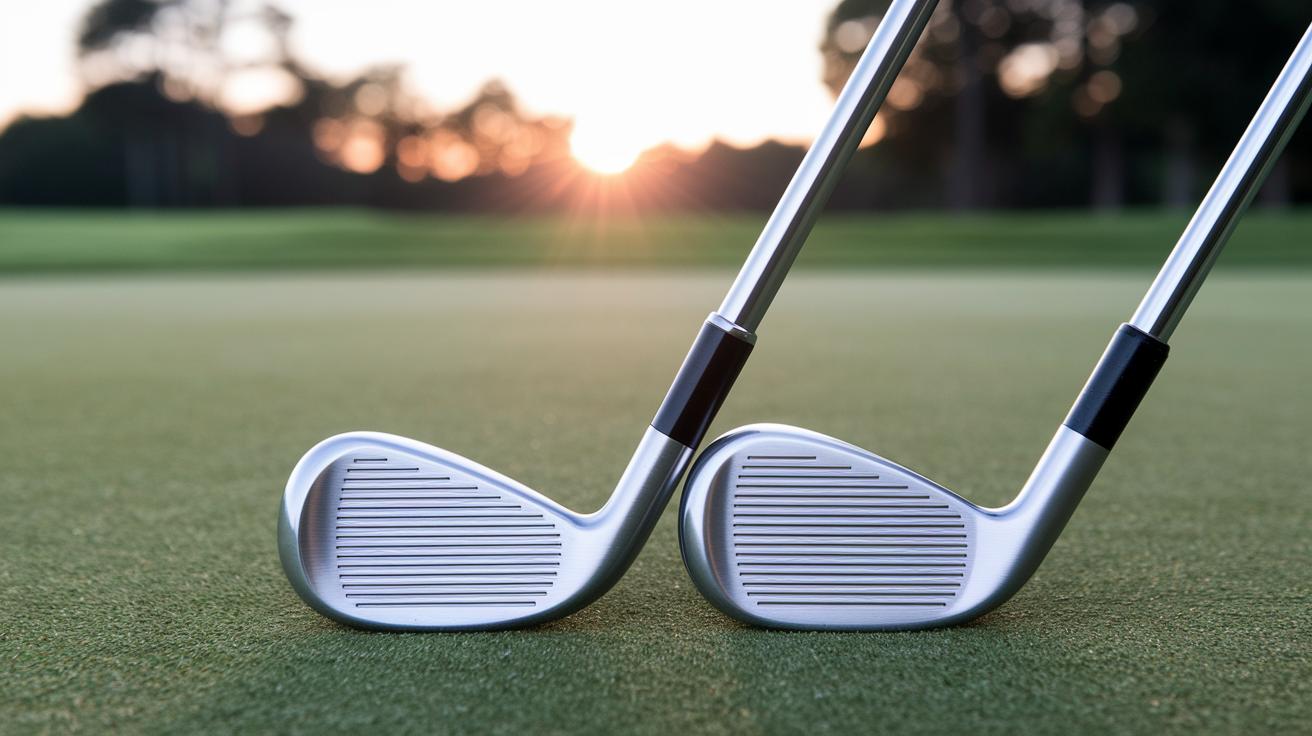
Blade irons feature a muscle-back design with a very thin topline and little offset. They give you a crisp feel that rewards a perfect strike, almost like the club whispers feedback every time you swing. These clubs are best for players who hit the center of the face consistently.
Cavity-back irons, on the other hand, have a hollowed-out back, a thicker topline, and a wider sole. They spread the weight around the edges to create a larger sweet spot. This design makes them more forgiving if your hit isn’t perfectly centered, blending control with extra error tolerance.
| Parameter | Blade-Style Irons | Cavity-Back Irons |
|---|---|---|
| Sweet-Spot Area | Small, requires precise contact | Larger, more forgiving |
| Forgiveness | Low for off-center hits | High for off-center hits |
| Topline Thickness | Thin, sleek profile | Thicker, enhanced structure |
| Ideal Handicap | Low-handicap, skilled players | Mid to high-handicap players |
Blade irons are perfect for those who love precise shot-shaping and crave detailed feedback. Meanwhile, cavity-back irons build confidence with their forgiving design, giving you that extra boost when it matters most.
Forged Blade Golf Clubs: Crafting Process and Material Insights
Forging blade golf clubs starts with one solid piece of steel that gets squeezed under heavy pressure. That squeeze tightens the metal’s grain, so every hit feels the same. Picture a rough metal block slowly turning into a club that sings with your swing, like a well-tuned instrument responding to every note.
Over the years, lighter forging methods have been developed to make clubs stronger and easier to shape. With these modern tricks, manufacturers craft clubs that are not only tough but also slim and sleek. When you hit the ball, you get a crisp, clear response, like a little nod saying, "Nice shot!" even if it's just a small tap on the club's face.
High-carbon and multi-phase steels are the secret ingredients. These special steels let makers create super-thin faces that still hold up under pressure. They balance a firm hit with a bit of give, so you feel every detail of your swing. It’s almost like the club is in tune with your technique, letting you adjust in the moment.
In the end, careful forging and advanced materials come together to build clubs that deliver both precision and a satisfying feel. Every little detail in the process helps form a unique connection between you and the ball, turning each swing into a learning moment and a pure joy on the course.
Performance Trends with Blade Golf Clubs: Player Experiences

A seasoned tester with an 8-handicap and a personal best of 5.6 shared that blade irons deliver a sound and feel you can really appreciate. When you hit the ball cleanly, you get this crisp, satisfying response, almost like the club is giving you a pat on the back and saying, "Nice shot!" That kind of instant feedback helps you fine-tune your swing with real confidence.
Skilled golfers tend to choose between two types of blades. Some love pure player blades because they allow creative shot shaping and give clear feedback on every hit. Others go for the distance-focused blades, which help boost your launch and keep your ball flying steadily, even when the weather isn’t playing nice.
Chatting on the range or out on the course, many elite golfers mention that the sound and feel of forged models can rival those classic vintage clubs. Even though these modern blades offer extra forgiveness, their precision still surprises many. One player even said, "I didn’t expect this level of precision from clubs with such a compact design."
Experts agree that the steady accuracy you hear isn’t just luck, it’s built into the club’s design. Top players stick with these blade irons because they combine detailed feedback with a reliable shot launch. This blend of artistic touch and solid performance helps sharpen your game with every swing.
Best Blade Golf Clubs of 2025: Top Models Reviewed
We tried these seven clubs both on the course and at the range to see how they performed in real play. They offer a mix of classic blade design for those who love precise shot-making and models built for extra distance that help with off-center hits. Each club was checked for its sound, feel, forgiveness, distance, and control over shot shape. One tester, an 8-handicap player with a best round of 5.6, mentioned how the crisp feedback feels like the club giving you a nod of approval, kind of like hearing a little "congrats" after a perfect swing.
We split the clubs into two groups. The first group gives you that true player iron feel with a compact design that offers immediate feedback. The second group mixes in more forgiveness and extra distance without losing the sharp precision of a blade. It's a bit like picking between a finely tuned instrument and one set up to play well on any course.
| Iron Model | Category | Key Feature | Approximate Price |
|---|---|---|---|
| Titleist 620 MB | Pure Blade | Exceptional feel and supreme control | $1,049 |
| Srixon ZX7 MK II | Pure Blade | Crisp feedback with refined precision | $999 |
| Srixon ZX5 MK II | Distance Blade | Enhanced distance with a forgiving clubface | $949 |
| Callaway Rogue ST Pro | Distance Blade | Balanced performance with robust forgiveness | $1,099 |
| TaylorMade P-7MB | Pure Blade | Classic blade looks with excellent shot-shaping | $1,049 |
| Ping i59 | Pure Blade | Great stability and precise feedback | $999 |
| Ping i525 | Distance Blade | Optimized launch and improved distance control | $899 |
Fitting Blade Golf Clubs: Customization for Pure-Strike Performance

Getting your blade irons fitted right really changes your game. Start by adjusting the loft and lie angles to help you hit the ball exactly in the middle every time. Think of it like tuning your car’s suspension to get the perfect curve.
Then, check out your shaft flex. If you’re just starting out, a softer flex may boost your performance. But if you’re more experienced, you might like a stiffer shaft for a steadier strike. And don’t forget the grip, finding one that feels natural is like having an extra part of your swing.
Next, play with the club head weight to balance your club perfectly. When the weight is just right, your swing flows smoothly and your ball makes clean contact.
Here’s a quick checklist for beginners:
- Adjust loft and lie angles for the best launch
- Pick a shaft flex that fits your swing speed
- Choose a grip that feels just right in your hands
- Try different head-weight settings for the perfect balance
Follow these simple steps, and you’ll fine-tune your clubs so they match your swing perfectly, helping you hit every shot with confidence.
Swing Techniques for Blade Golf Clubs: Consistent Contact
Blade clubs feature a narrow sole and little offset, so every swing needs to be perfectly timed. You must hit the ball dead center to take full advantage of the club’s balanced design. A smooth, controlled tempo is key, as if you're guiding a finely tuned machine down the fairway.
One drill to try is the slow-motion impact swing. Slow your movement and really watch how your clubface meets the ball. It’s like the club gently tapping the ball, almost like a soft pat that makes perfect contact every time. Ever felt that satisfying connection after a well-hit shot?
Another drill involves using an alignment stick. Place it along your target line and swing so your club moves right over it. This little trick helps keep your swing straight and on point.
A third drill uses an impact bag. Hit it with a controlled swing to feel exactly when you make contact. This drill helps you fine-tune your shot-shaping skills, making each swing a step toward greater accuracy and control.
Final Words
In the action on our post, we covered everything from the precise design and forging process of blades golf clubs to player experiences and fitting tips for optimal performance. We walked through design comparisons and swing techniques that help you master pure-strike accuracy. Each section offered insights on equipment enhancements and how your swing can really shine on the fairway. Next time you step up to the tee, take these pointers along, and enjoy your round knowing your clubs are set for a great performance.
FAQ
Q: What are the differences between blade golf clubs and cavity-back irons?
A: The differences between blade and cavity-back irons involve design and performance. Blade irons feature a compact head with a thin topline that provides feedback and control, while cavity-backs offer extra forgiveness with a larger sweet spot.
Q: Who makes blade golf clubs?
A: The makers of blade golf clubs include top brands like Titleist, Callaway, TaylorMade, Ping, and Srixon. These companies use refined forging techniques and quality materials to craft blades that deliver exceptional feel and precision.
Q: What are some of the best blade golf clubs or best blade irons of all time?
A: The best blade irons often spotlight models like Titleist 620 MB, Srixon ZX7 MK II, and Ping i59. These irons are celebrated for their supreme feel, shot-shaping control, and refined precision on each strike.
Q: Where can I find blades golf clubs for sale?
A: Blade golf clubs can be found at specialty golf stores, pro shops, and reputable online retailers. Local clubs and demo days also provide chances to try and purchase these precision-engineered irons.
Q: What types of golf irons are considered blades?
A: Blade irons, also known as muscle-back clubs, come in designs that emphasize a slim clubhead, narrow sole, and thin topline for enhanced feedback and shot-shaping control, appealing mainly to skilled players.
Q: Does Tiger Woods use blade irons, and do pro golfers use them?
A: Tiger Woods typically opts for cavity-back irons due to their forgiveness, but many pro golfers still choose blade designs for their superior feedback and control on center-face strikes.

