
Ever had that feeling your round is off before you even tee off? Playing golf isn’t just about hitting balls, it’s about planning each shot like you’re putting together a great painting. In this post, we share simple, smart tips to help you carve out smooth, natural paths down the fairway. Think of it like fine-tuning a drawing with a pencil and eraser; you learn to adjust as you go so every swing counts. Ready to rethink your game and plan a round that really feels just right?
Strategic Routing Methods for Efficient Round Planning
When planning your course route, it's all about trial and error. You might map out a path only to find that a tricky hole needs a quick detour. Each adjustment, like tweaking a drawing with your pencil and eraser, helps you create a route that feels just right.
Getting out on the course really matters. Seeing the landscape up close lets you spot where the tee flows naturally into the green. That smooth transition means you’ll always know where to head next once a hole wraps up.
Here are a few simple steps to help refine your plan:
- Use topographical maps to spot natural features that link holes.
- Mark hazards and safe zones so you can plan alternative pathways.
- Test your sequence in practice rounds, and don't worry if you need to erase old marks and try again.
Expert Jeff Mingay reminds us that a well-connected course not only looks great but also makes play more comfortable. With a solid plan, every shot counts, and each transition flows smoothly, just like a great round on the course.
Layout Analysis Techniques in Golf Course Routing

It all begins by studying the land's shape. Back in the day, designers used pencils, erasers, and tracing paper, often reworking their plans until everything fit just right. Nowadays, whether you use high-tech mapping tools or stick with a trusty sketch, the goal stays the same: set up the holes so every shot feels smooth and natural.
Topographical Map Evaluation
Check out the contour lines on the map, they show you where the land rises and falls. Look for small curves that hint at how water might move across the land, which can affect ball roll and even mark where hazards might lie. Picture spotting gentle swirls indicating a natural channel for water. This simple trick helps you plan the hole order so it sits perfectly with the lay of the land. By comparing the slopes, you can figure out where to challenge players with an uphill shot or where a flatter stretch makes the perfect landing spot.
Connectivity Between Holes
Figuring out the route isn’t just about designing each hole on its own; it’s also about making the whole round feel friendly and connected. Check out how far you have to walk from one tee to the next green. Make sure there are clear sightlines so players instantly know where to head after each hole. A good layout keeps the game on an easy, intuitive flow without having to stop and wonder what’s next. Regular visits to the course help you refine these paths, ensuring each transition energizes the whole round.
Precision Shot Placement and Tee Selection in Routing Strategies
Effective routing is all about making every shot count. Choosing the right tee sets the stage for smooth transitions between holes. You can select forward, middle, or back tees to tweak both distance and shot angle to suit the course layout. For instance, a forward tee might offer shorter yardage and wide-open fairway views, much like opting for the easiest path on a well-known course.
Tee Location Impact
The spot where you tee off can really change your strategy on the course. Using a forward tee usually means less distance to cover and fewer hazards along the way. On the other hand, choosing a back tee gives you a tougher challenge, making every shot a crucial part of your game plan. Picture yourself stepping up to a tee box with a clear view of the landing area, suddenly, you're lined up perfectly for your next shot.
Shot Vector Analysis
Visualizing your shot's path is key to a smart game. This means taking into account things like a soft breeze or the gentle slope of the green, just like feeling out the perfect moment in a conversation. Watching the terrain closely helps you pick the right club and decide how to shape your shot. By measuring yardage and studying the course’s features, you can avoid risky plays and keep your energy focused on making every stroke count.
Hazard Avoidance and Risk Assessment within Golf Course Routing
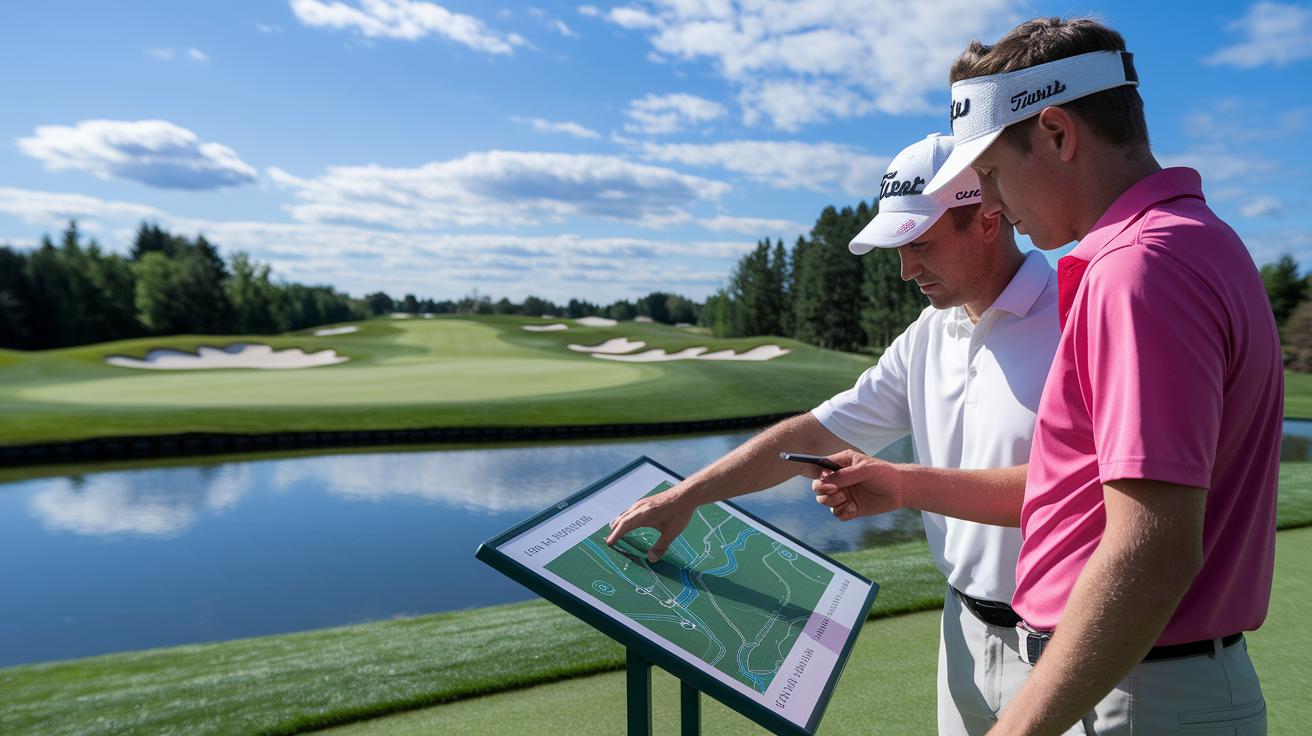
When you’re out on the fairway, routing isn’t just about finding a smooth path. It’s also about dodging hazards and making smart calls. Every shot counts, and taking a quick look at the risks, like sand bunkers, water, or rough patches, keeps you moving forward without a hitch. Course designers plan layouts with different challenges, whether it’s a dozen par 3 holes or a mix of long ones, to help you map out a safer game.
Players need to judge these risks quickly, weighing the chance of losing a ball against the call to hit a bold, advancing shot. Here’s a simple way to build up your own risk assessment approach:
- Identify tricky spots by checking out the map, especially where water bodies and bunkers are.
- Have backup plans ready if your shot ends up in a rough area.
- Plan how holes connect so you don’t lose your way on the course.
Smart risk assessment isn’t just about avoiding trouble, it turns the course into a fun challenge. With practice and a little on-course observation, you learn to balance the thrill of a risky shot with playing it safe. Every shot becomes a win when you plan it well and keep those hazards in check.
Advanced Tools and Techniques for Golf Course Routing Strategies
Today’s routing mixes the classic pencil-and-paper approach with modern digital tricks. Golfers and course designers now have loads of tools to make each shot count. For instance, GPS yardage devices give you real-time distance and help adjust for wind (that means they show how a slight breeze might change your ball's path). Digital mapping and aerial photos let you quickly see the course layout, including slopes and hazards, at a glance. Still, even with these neat gadgets, taking time to refine your design the old-fashioned way really makes a difference.
Here are some handy tools to boost your routing strategy:
- GPS rangefinders: They give live measurements and wind insights.
- Route-planning apps: These let you tweak your course setup on the fly with digital sketches.
- Plotted scorecards: They help you track your shots and understand the course layout.
- Tracing-paper overlays: A hands-on way to make design tweaks as you plan.
- CAD systems: They offer detailed design changes using digital blueprints.
Using these tools together makes sure each hole links naturally to the next, building your confidence shot by shot.
Final Words
In the action, we explored smart ways to plan a round. We covered mapping techniques, shot planning, and proper hazard avoidance. The post broke down how to use both classic pencil-and-paper methods and modern GPS tools to find smooth paths from tee to green. Each tip helps build confidence and improve your overall game. Keep testing these golf course routing strategies on your next round, and watch your play get smoother and more enjoyable.
FAQ
What does a golf course routing strategies PDF provide?
The golf course routing strategies PDF provides detailed methods for planning an efficient round. It lays out step-by-step processes like sequencing holes, assessing hazards, and applying trial-and-error adjustments to reduce wasted effort on the course.
What are the best golf course routing strategies?
The best routing strategies blend map analysis, hazard check, and tee selection tactics. They help golfers connect holes smoothly, reduce walking time, and keep the play flowing naturally throughout the round.
What is golf course routing?
The term golf course routing refers to planning the order of play to connect holes with minimal wasted steps. It involves mapping out routes, assessing terrain, and planning shot sequences for a smoother experience on the course.
Is 18 holes always par 72?
The statement that 18 holes are always par 72 isn’t always true. Many courses have varying pars to offer different play challenges, so the total par can differ from one course to another.
Do they move the holes on a golf course every morning?
The holes aren’t moved each morning. While maintenance crews might adjust pin placements or tee locations for course upkeep, the hole locations remain fixed to deliver a consistent playing experience.
How do you plan your way around a golf course?
The process of planning a course involves studying maps, checking the terrain, and evaluating walking routes between tees and greens. This thought-out approach helps golfers minimize delays and maintain a comfortable flow.

