
Have you ever noticed how a golf course can turn a simple round into an exciting challenge? Course design is all about mixing tees, fairways, hazards, and greens so that every shot feels fresh. In this piece, we'll dive into five layout styles that keep every hole full of surprises. Think about coastal courses where the wind adds a twist or parkland designs with clever hazards that catch you off guard. Each layout is built to test your skills and make every round a memorable adventure.
Essential Components of Golf Course Layouts
Most courses feature 18 holes, although sometimes a 9-hole course is played twice to finish a round. On each hole, you start at the tee box (the spot where you begin) and hit your shot down the fairway (the main playing area). Along the sides, there's the rough, which is just longer grass meant to challenge you, and then there's the green, where you putt with accuracy. Hazards, like bunkers (sand traps that force you to plan carefully) and water hazards like ponds, add an extra layer of challenge to each hole.
Holes come in different types, par-3, par-4, and par-5, and each offers a different yardage to suit players of all skill levels. Tee boxes are arranged so both beginners and experienced players can adjust the total yardage to match their style. Fairways are laid out with varying widths and natural curves to guide your ball, and semi-rough areas are added to keep the challenge alive without harming the green.
Imagine starting a par-4 where the tee box sets up the course into varied, exciting zones. Each element works together to create a layout that keeps every golfer on their toes. Isn't that what makes a round of golf so enjoyable?
Variations in Golf Course Layouts: Links, Parkland, Heathland, and Desert

Links courses give you that classic coastal vibe with sandy soil, deep pot bunkers, and hardly any trees. Imagine a course along Scotland's shores where the wind sweeps across wide fairways, making every shot feel like a tribute to old-school design. The natural hills and dips challenge you on each swing, keeping you on your toes.
In contrast, parkland courses are set inland with tree-lined fairways and neatly trimmed greens made of bentgrass (a type of grass that is smooth and inviting). Think of a place like Augusta National where each hole is planned with care. The clear lines between the fairway and rough, paired with well-placed bunkers, give you a familiar and organized setting to work your game.
Heathland courses mix the best of both worlds from links and parkland designs. With firm turf highlighted by splashes of wild gorse, these courses, often found in areas like Surrey or Berkshire, offer an extra twist. The firm, dry ground means you need to be extra precise with your shots, turning each hole into a new puzzle to solve.
Desert courses stand out in dry regions with native plants like cacti and big changes in elevation. Under the hot sun, the fairways demand careful club selection, as the rise and fall of the land can sneakily affect your shot. Each layout uses smart design to craft an experience that is as varied as it is exciting, blending classic ideas with modern challenges on every hole.
Blueprint Strategies for Fairways and Green Complex Structuring
Golf course designers plan fairways with care, using detailed blueprints that include safe landing zones (areas where your ball can rest nicely), smooth contours, and changes in width. These smart touches help guide your tee shot by giving you clear targets. It’s a bit like having a well-timed bus stop on your route, you know exactly where to aim so you don’t miss your mark.
They also set up several tee boxes to adjust the course length, which means the course works for everyone whether you're just starting out or are a seasoned pro. Think of it as having different starting lines in a race: beginners can enjoy a shorter, easier route while experienced players get a longer challenge that really tests their skills.
Green complexes are crafted with layered slopes and different pin placements that influence your approach shot. Designers often add subtle edges, or “false fronts,” around the greens. These gentle bumps force you to consider everything from wind to distance before you swing. Ever notice how a green’s design can completely change your strategy, turning a simple putt into that unforgettable shot?
Course architects don’t stop there. They include patches of semi-rough grass around the greens and fairways that act like soft barriers. These natural dividers help you hit with precision while protecting the smooth finish of the putting surface. In the end, every thoughtful feature comes together to create a course that challenges you while rewarding smart, careful play.
Strategic Hazard Placement and Risk-Reward in Golf Course Layouts
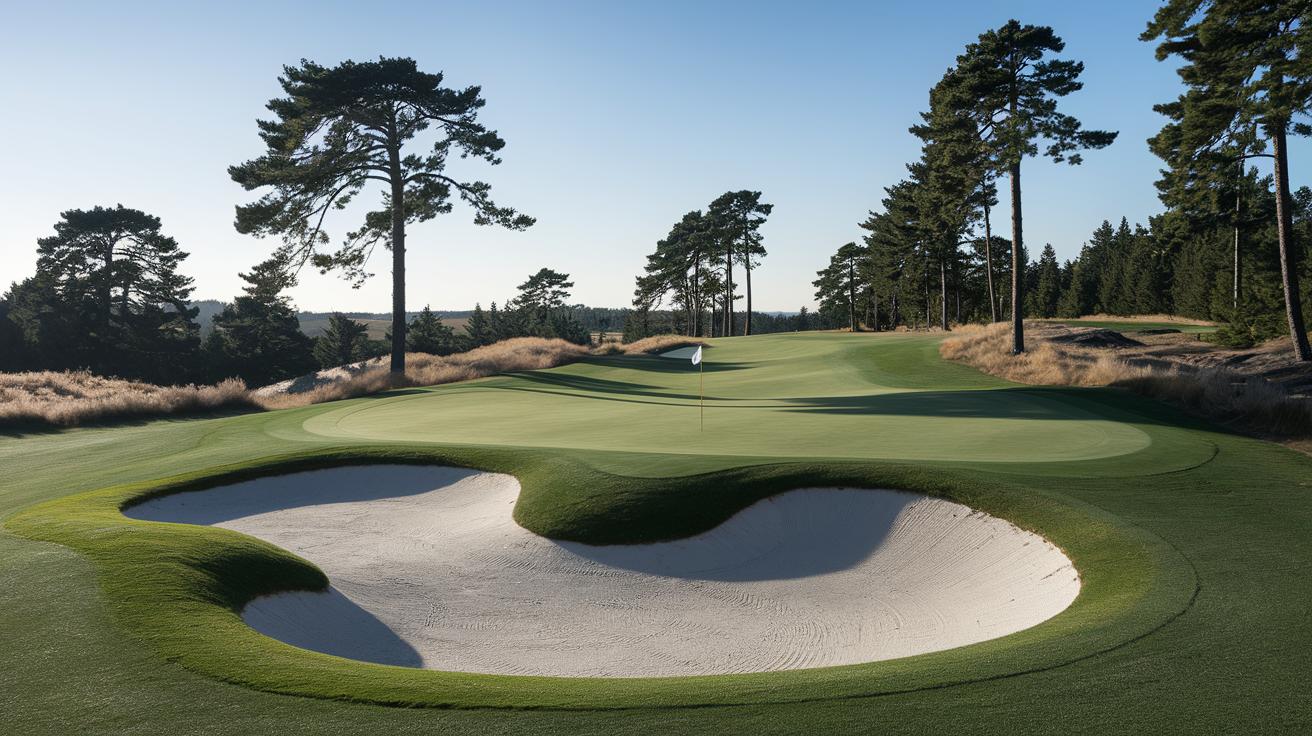
Golf course designs are planned with smart hazard spots that make every shot a thoughtful decision. Bunkers are usually set right in landing zones and next to the greens, so your drive or careful approach gets a fresh challenge. Imagine teeing off and seeing a bunker right where you planned to land, it makes you adjust your shot with care.
Then you have water hazards like ponds, streams, or lakes. These water features, whether natural or man-made, make you shape your swing and think twice before taking the shot. Ever stand before a water hazard and wonder, "Should I play it safe or aim for something bigger?"
Out-of-bounds areas, marked by white stakes, guide you on safe routes while warning you that risky shots come with penalties. And then there are sand traps, which add both risk and reward. A daring shot might clear a hazard but could also drop you into a tricky sand trap.
In the end, every hazard pushes you to decide between playing it safe with a wide margin or going bold for a big reward. Each hole turns into a little strategy game where you balance risk and reward with every swing.
- Bunkers challenge your drives and approaches.
- Water hazards push you to get creative with your shots.
- Out-of-bounds zones remind you to keep it safe.
Every hole offers its own puzzle, nudging you to mix caution with a bit of daring every time you step up to the tee.
Routing Strategy and Hole-by-Hole Layout Insights
Golf course routes are like a well-planned map that takes you from one fun challenge to another. The design makes sure you see beautiful views while keeping the course easy to look after. Each hole is set up to keep your round interesting and balanced, mixing up surprises along the way.
The course has all kinds of holes. There are par-3s that challenge your short game, par-4s where strategy meets power, and par-5s that invite bold play. Some holes curve like a winding road, while others stay straight and true, giving you a different feel each time you tee off. And then there are those uphill challenges that need extra power or sidehill shots that make you rethink your club choice. Imagine a par-4 with a gentle uphill slope that makes you adjust your aim, kind of like following the smooth bend of a river.
- The order of the holes creates a natural rhythm that guides your round.
- A mix of hole types tests everything from precise short games to powerful drives.
- Changes in elevation and shape push you to switch up your shot strategy every time.
Every part of the layout tells its own story, making for a round that’s memorable from the first drive to the final putt.
Leveraging Digital Mapping and 3D Visualization in Golf Course Layouts

Today, building a golf course is as high-tech as it gets. Designers use mapping software to plan and manage every inch of the land. They rely on aerial LiDAR (a tool that uses light to capture detailed land features) and GIS (systems that help map out geography) to see every bump and dip, almost like the course is whispering its natural secrets.
Then come the 3D models. Imagine turning a digital model on your screen and watching the green’s gentle curves come to life. These models show contour changes, bunker depths, and green undulations in a virtual way, helping the team decide exactly where to place hazards so every shot offers a fun challenge.
Interactive digital schematics make planning even easier. Picture a clear digital layout that shows every tee box, water hazard, and sand trap. With everything mapped out, everyone involved can easily suggest changes to balance playability with a bit of challenge.
Players enjoy this tech too. Yardage books and GPS devices tap into these digital maps to give you real-time info on distances and shot planning. Whether you’re a weekend golfer or a seasoned pro, having this detailed view before you swing makes your round more engaging and informed.
Thanks to these advanced tools, every part of a golf course is measured and designed to encourage both precise and creative play. It’s a blend of innovation and tradition that keeps the game exciting.
Sustainable Design and Maintenance Practices in Golf Course Layouts
Golf courses these days are taking a fresh, earth-friendly approach to design. They mix fun play with a real care for the environment. Designers now choose grasses that need less water (drought-tolerant grasses) and set up smart watering zones. This strategy saves water and keeps the fairways solid, even during a dry stretch. Plus, natural wildlife corridors and buffer areas get built into the layout. Imagine native wildflowers lining your shot, nature’s own decoration!
Regular care keeps the course inviting for every round. Quick fixes for divots, well-raked bunkers, and a watchful eye on the pace of play all come together to keep the turf in top shape. Yardage markers and little guidebooks help out too. They give clear distances so players stick to the path, protecting sensitive spots.
Here’s a quick look at the eco-friendly perks:
| Eco-Friendly Feature | Why It Matters |
|---|---|
| Drought-Tolerant Grasses | They need less water, so the course stays green and saves resources. |
| Wildlife Corridors | Add natural beauty and provide safe spaces for local animals. |
| Routine Turf Care | Keeps the greens smooth and ready for every swing. |
| Yardage Guides | Help reduce foot traffic on delicate patches by showing clear shot distances. |
Each of these eco-friendly steps not only takes care of the course for future rounds but also makes sure everyone gets to play on a well-loved, environmentally mindful design.
Final Words
In the action, we dove into the heart of golf course layouts, examining everything from tee boxes and fairways to hazard spots and green designs. We saw how course routing blends risk with reward and how digital mapping brings every detail to life. Sustainable playing and maintenance practices were also highlighted, keeping courses fresh and inviting. Every element works together to challenge players while adding enjoyment to each round. Next time you play, take a moment to appreciate these smart designs and enjoy the game even more.
FAQ
Q: What are golf course layouts for sale?
A: The phrase golf course layouts for sale refers to purchasing complete design plans that detail fairways, greens, hazards, and yardage. Buyers get ready-to-use maps suited for various project types.
Q: Are free golf course maps available online?
A: The question about free golf course maps means many websites offer complimentary course layouts online. These resources include digital schematics and PDFs, making it easy for enthusiasts to access detailed course designs.
Q: How do PDF layouts and yardage maps work for golf courses?
A: This inquiry combines PDF layouts and yardage maps, meaning these digital files provide comprehensive course designs with distance markers. Players can use them to plan shots and navigate the course efficiently.
Q: What features do 3D golf course maps and golf course map art offer?
A: The mention of 3D maps and map art refers to designs that use layered visuals to illustrate terrain, bunkers, and greens. They offer a unique, vivid view of a course’s structure for practical and aesthetic use.

