
Have you ever wondered how a golfer turns a simple round into a thrilling contest? Golf tournaments are much more than just swinging a club, they're smart challenges that test skill, strategy, and timing. Picture this: sometimes players count every single stroke, and other times they go head-to-head hole by hole, with each rule playing its part like a well-timed play on the course.
In this article, we're breaking down the different formats and rules that shape these exciting events. From the crisp sound of a driver off the tee to that satisfying final putt, we'll take you through the whole story, giving you a clear view of what really happens on the course.
Comprehensive Overview of Golf Tournament Mechanics
Golf tournaments are lively events where precision, consistency, and a competitive spirit mix on the course. Most tournaments happen over several days with multiple rounds. Players face different course layouts, and sometimes they count total strokes over four rounds (this is called stroke play, where the goal is to have the fewest strokes), while other times they go head-to-head hole by hole in match play.
Each tournament can vary a bit, depending on its format and rules. Key features include:
- Format type: Stroke play (total strokes) or match play (winning holes)
- Scoring method: Fewer strokes or more holes won
- Round structure: Several rounds played over days
- Qualification process: Earn your spot with pre-event play or ranking performance
- Prize allocation: Rewards based on final standings
These elements help shape the competitive feel of the game and show both players and fans how the event is set up.
Officials keep a close eye on things to make sure everyone plays fair. They call penalties for things like hitting a ball out of bounds or into hazards, so all players stick to the same high standards. Every shot counts as players balance risk and reward and navigate the course. With clear rules and penalties, each tournament becomes a true test of skill, endurance, and strategy on every hole.
In-Depth Look at Golf Tournament Formats and Rules

Top tournaments are shaking up the rules, and it’s really changing how players handle both stroke play and match play. Back in the day, golfers stuck to safer shots, but now more daring moves are encouraged, even on the toughest holes. For example, one major used a sudden death rule that pushed players to take smart risks on those long par-5s. Quick decisions like that can totally flip the score, and players now use tools like data charts and course maps (think of these as modern cheat sheets) to find every edge they can.
Match play isn’t what it used to be either. It’s evolved from straightforward one-on-one matchups into a game of deep strategy. Players now plan with the wisdom of many head-to-head battles, which makes every shot count. I still remember hearing about a tournament where a late comeback on the final hole completely changed the mood. Today, officials keep a close eye on these new rules to make sure every player gets a fair shot. This means golfers have to mix sharp skills with quick adaptability on every round.
Golf Tournament Scheduling and Course Layout Considerations
Most tournaments are played over four rounds with golfers given set tee times. This means every player starts right on time, keeping the game moving and fair for everyone. Imagine the satisfying sound as each driver hits off the tee at a perfectly timed interval, it makes the whole round feel smooth and organized.
The layout of the course really shapes how golfers approach their game. Every hole is unique, with its own design, a par score (the number of strokes a skilled golfer is expected to take), and specific challenges. Picture a narrow fairway lined with trees that forces you to think about the perfect angle for your shot, it’s like facing a fun, little puzzle at each turn.
Weather and the condition of the course also play a big part in how the tournament unfolds. A sudden gust of wind or a green that’s a bit too wet can quickly change the pace of play. Imagine feeling a strong breeze that nudges your ball off course, so you have to adjust your plan on the fly. All these elements come into play to create a tournament that tests both your skill and your ability to adapt.
Qualification, Seeding, and Prize Allocation in Golf Tournaments

Golf tournaments kick off in different ways. Sometimes, players have to prove themselves in pre-event rounds or lean on their world rankings and past performances. Imagine a local qualifier where a golfer, after a few rounds with really low scores, earns a shot at the big leagues. These early rounds test whether a player can handle the pressure when every shot counts. And if you’ve been on top in previous tournaments or hold a high ranking, you might skip these extra rounds. It’s a system that keeps the competition fierce while giving rising stars a fair chance.
Once the field is set, the next step is seeding. This is how the draw is set up to keep things balanced. Usually, a player’s qualifying score or world ranking decides their spot, spreading out the top contenders evenly. Think of it like arranging teams in a friendly match so that everyone has a good shot at success. Then comes prize allocation. The prize fund is divided so that those who finish at the top grab a larger slice of the pie. Every shot matters because playing well not only boosts your ranking but also bumps up your share of the winnings.
Rules Enforcement and Penalty System in Golf Tournaments
Officials keep a close watch over every game to make sure everyone plays by the rules. If a player sends the ball out of bounds or into a hazard, extra strokes are added right away. The refs watch every swing and shot, making sure each competitor sticks to the guidelines. They also check that clubs and balls meet the set standards. Imagine a player accidentally using an unapproved ball and officials stepping in immediately to fix the mistake.
Oversight committees back up the refs by reviewing close calls and handling tricky situations. This team effort helps keep things in order and the competition fair. Every penalty stroke is a way to keep the game honest and level for all players.
Everyone involved shares the responsibility of keeping things fair. Different groups check various details during the tournament, and officials use these rules not just to penalize but to help players fine-tune their game. This careful system of checks turns every stroke into a test of skill and teamwork, showing exactly what it takes to earn a respectable score in the tournament.
Modern Enhancements in Golf Tournament Viewing and Engagement
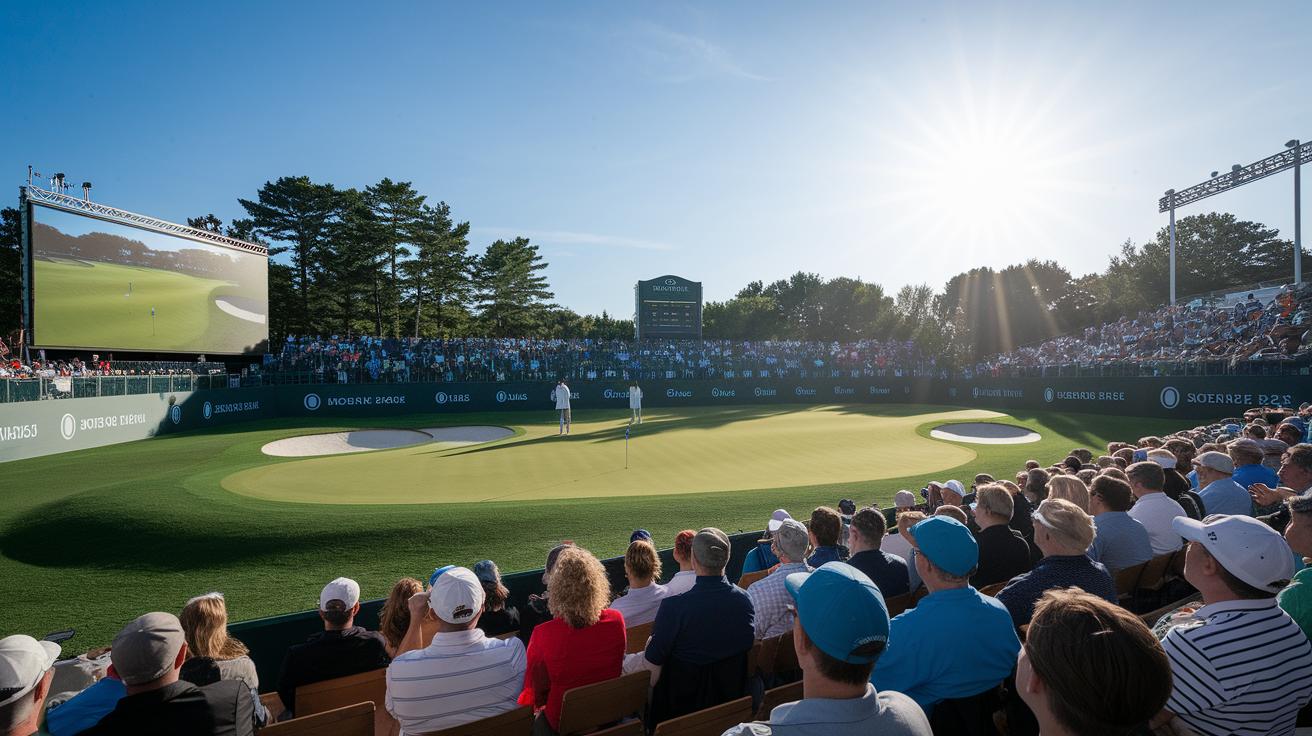
Golf tournaments have jumped on some cool digital tools that pull fans straight into the game. Live event streaming helps you feel like you’re right on the course, watching every drive and putt as if you were there. Digital scoreboards update each shot in real time, giving you instant insights like you’re chatting with a buddy next to the leaderboard.
Social media is buzzing with behind-the-scenes content and player highlights, sparking lively conversations among fans. It’s like having a front-row seat where every swing is part of the story. Broadcast coverage now goes beyond TV, thanks to smart mobile apps that serve up real-time stats, customizable viewing angles, and easy access to player profiles.
This fresh, digital approach makes watching a tournament feel personal and interactive, almost like getting updates from a friend who’s right there on the green. It’s a game changer that invites everyone into the excitement and brings the energy of the course directly to you.
Final Words
In the action, we explored everything from tournament formats to course layout and scheduling. We walked through how players qualify, how match play and stroke play work, and even how modern tech brings fans closer to the game.
Next time someone asks how do golf tournaments work, you'll know the ins and outs of scoring, rules, and exciting digital updates. Keep enjoying the game and may every round bring a little extra thrill.
FAQ
How do golf tournaments work?
The way golf tournaments work is that players compete in formats like stroke play and match play, follow set-round schedules, and obey strict rules with penalty strokes for infractions. Prize money rewards top finishers.
What is the difference between stroke play and match play?
The way stroke play and match play differ is that stroke play counts total strokes over rounds while match play pits players against each other on each hole, with the outcome based on holes won.
How is tournament scheduling organized?
The way tournament scheduling is organized is that events usually span four rounds with predetermined tee times. Course layout and conditions influence timing and strategy, keeping the pace fair throughout play.
How do players qualify and get seeded in tournaments?
The way players qualify and get seeded is by earning spots through pre-event rounds, world rankings, or previous performances. Seeding arranges the draw for balanced competition, with prize funds allocated by final standings.
How are tournament rules enforced and penalties applied?
The way tournament rules are enforced is through officials who monitor play, administer penalty strokes for breaches like out-of-bounds shots, and check equipment compliance to maintain a level playing field.
How has digital technology enhanced golf tournament viewing?
The way digital technology has enhanced viewing is by offering live streaming events, interactive scoreboards, and social media updates, providing fans with real-time, engaging experiences during tournaments.

